
By Yvonne Stutz, Board Member and Host
«The later in the day, the better the weather. Towards the end, all the beautifully snow-covered white mountains could be seen without a cloud in sight. A dream!»
This is what I wrote in my diary during my stay in Argentina in August 2026. Escaping the summer heatwave back home, I travelled to El Calafate in the province of Santa Cruz to take part in the Winter Swimming World Cup (WSWC). This ice swimming competition, held in water temperatures below 5°C, was organised for the fourth time in Los Glaciares National Park, with the spectacular Perito Moreno Glacier as its backdrop. I first heard about the event just after the inaugural edition had come to an end.
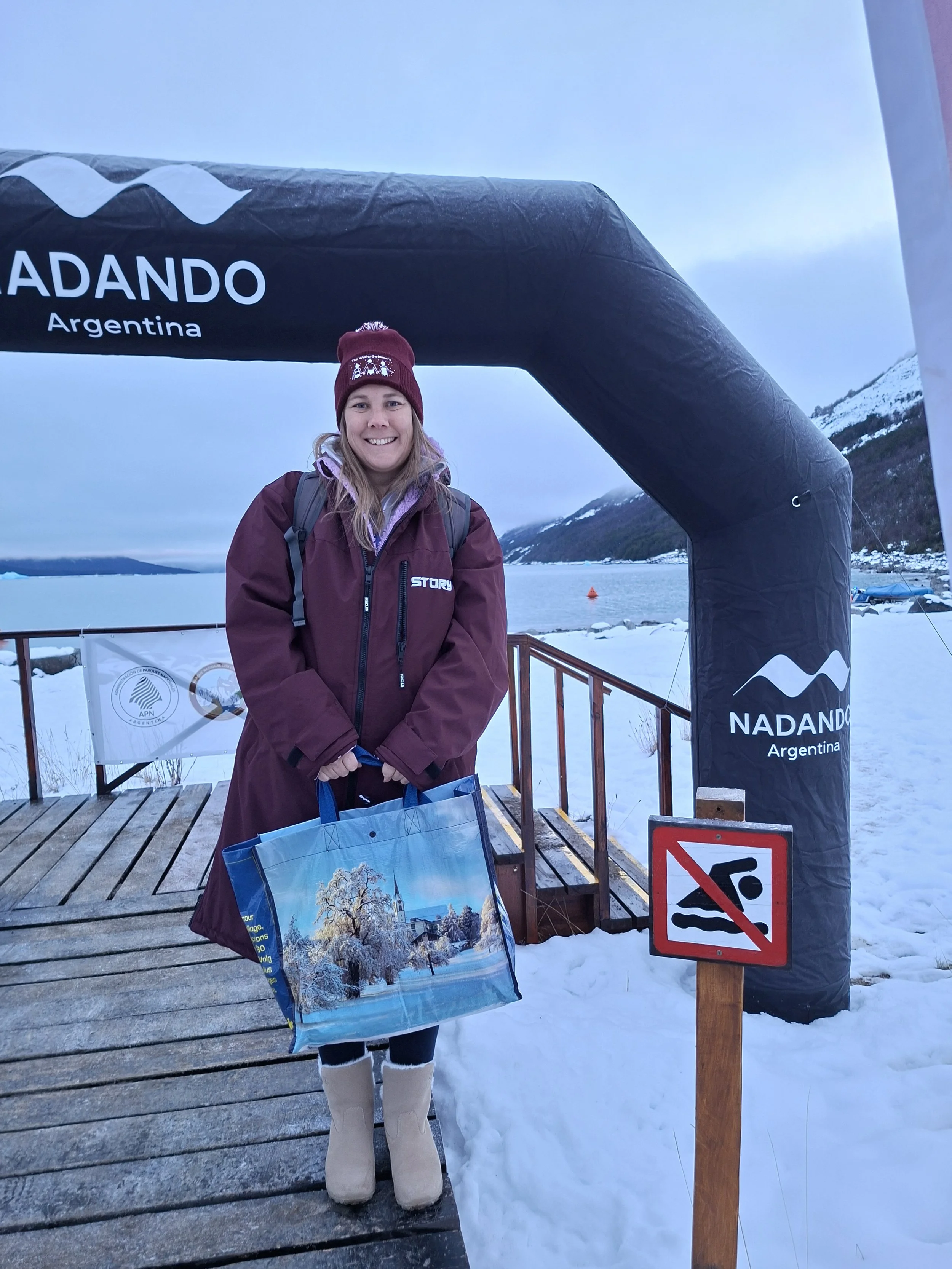
Normally, no swimming is allowed.
Having already visited and fallen in love with Perito Moreno as an «ordinary» tourist ten years earlier, I knew I wanted to swim there one day. But how could I even imagine such a thing being possible? I am Yvonne, and these days, whenever I see inviting water, the temperature hardly matters to me. Through gradually acclimatising to ever colder water, learning different techniques for warming up afterwards, and attending various events on the subject, I have reached a point where nothing can hold me back. So by the time the WSWC El Calafate 2026 came around, only those who did not know me particularly well found my wish to go difficult to understand. Admittedly, it is an unusual hobby, but it has enriched my life enormously, and my experiences in Argentina have enriched it even further. And so there I was, on the cold morning of 4 August, unable to take my eyes off either Lago Argentino or the glacier. Yet I had not come all this way simply to admire the scenery. I was here to swim. I was already incredibly happy, even before the cold water triggered its surge of feel-good hormones.
Acclimatisation
In the days leading up to the event, I stayed on the coast in Comodoro Rivadavia, where I swam in the 6°C Atlantic Ocean near the breakwater rocks that are home to sea lions. At night, I went for a second swim in the dark bay beneath the light of the full moon.
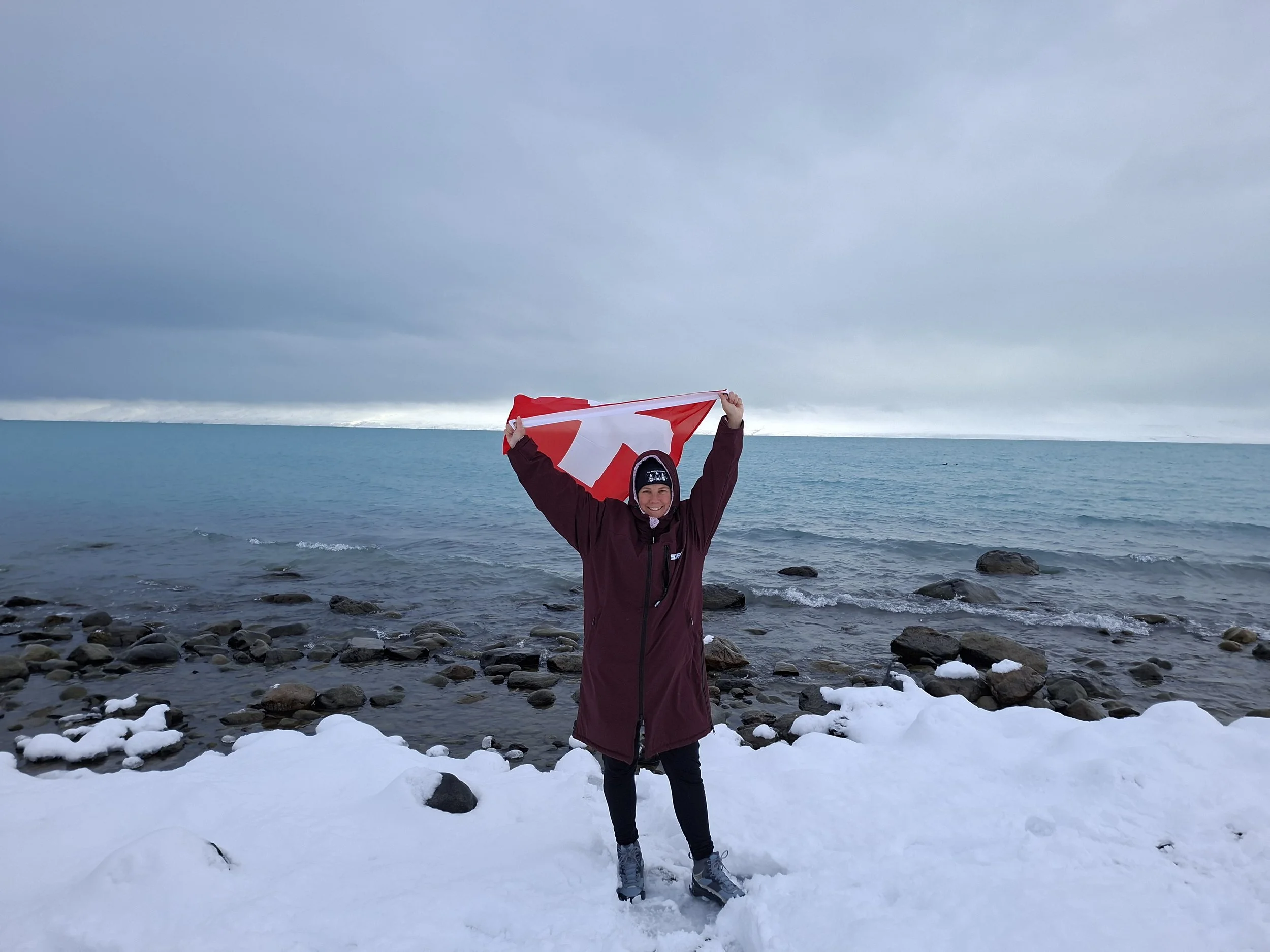
Swiss National Day at Lago Argentino.
Adriana, a winter swimmer whom I had met at another competition, hosted me and even organised a talk for me at the Club Náutico, as well as trips to deserted beaches where we were lucky enough to spot whales. This gave me the opportunity to make friends with more athletes before the WSWC and immerse myself in the Argentine winter swimming community. My knowledge of Spanish proved very useful, and I was already familiar with the country's culture from prior experiences. I had always felt very comfortable in Patagonia during my previous visits. I greatly enjoy its vast open spaces, harsh weather, and simple way of life. The same was true during the more intensive acclimatisation period in El Calafate. Many participants had arrived several days early. We met at the lakeshore every day, braved the weather, and had great fun swimming in water that was almost at freezing point. Patagonia experienced unusually heavy snowfall that winter, and the town was covered by a thick white blanket of snow, which over the following days turned to slush before fresh snowfall arrived once again. I sent photos home, commenting that all that was missing was some Christmas lighting.
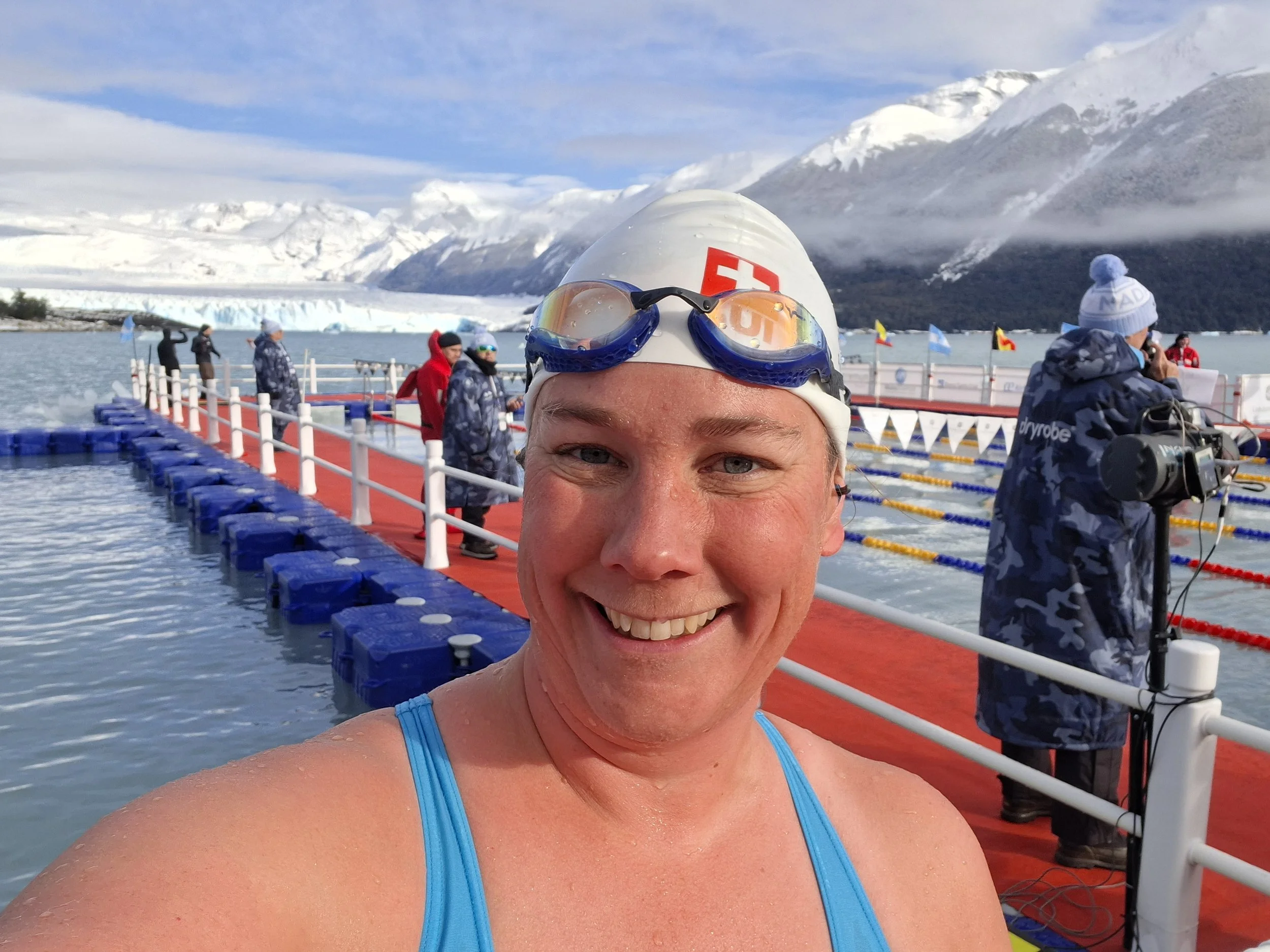
After my first race in front of fantastic landscape.
The Competition
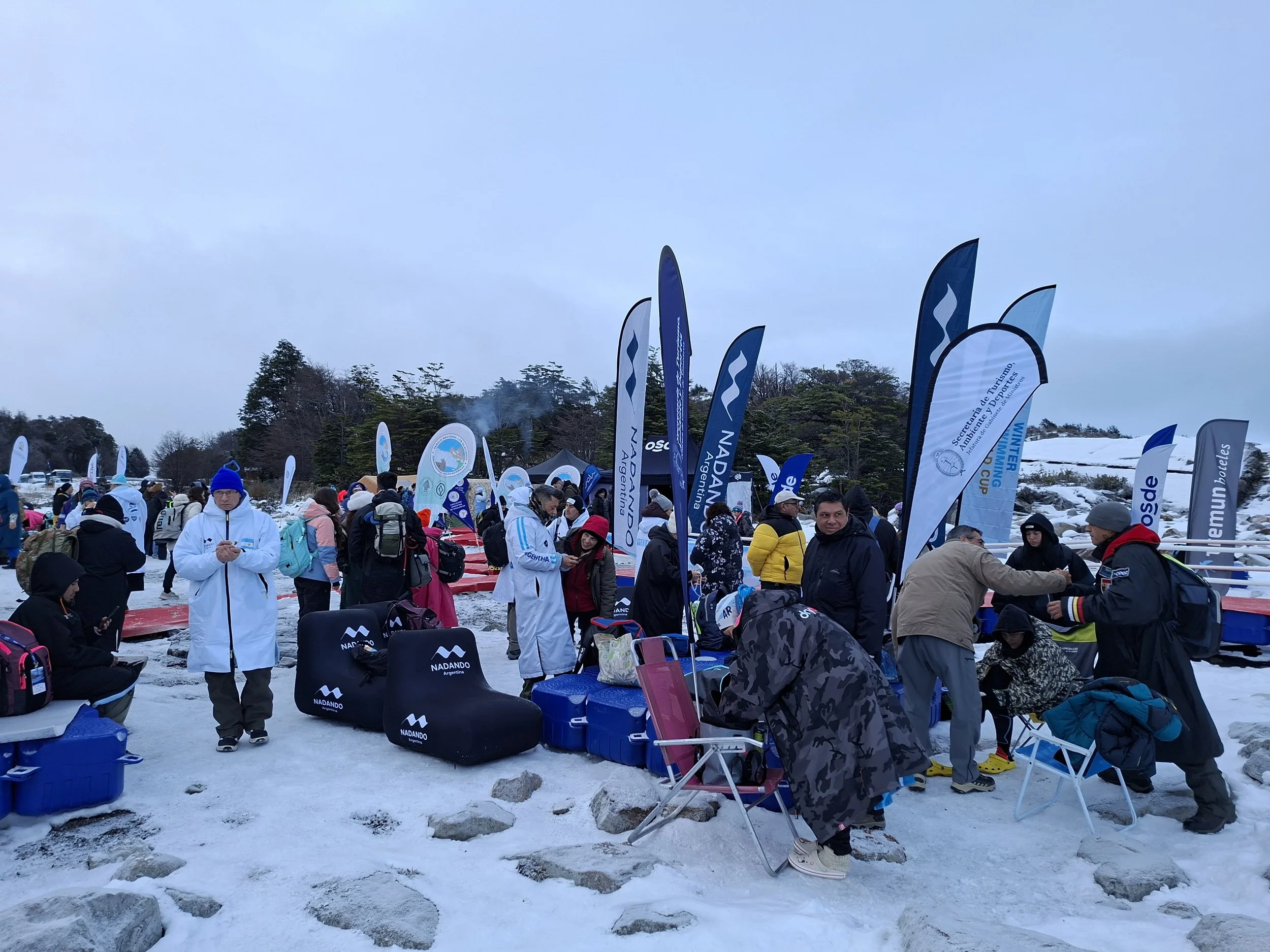
Everything happend outdoors.
Although the glacier water flows into the same lake, it is usually 1 to 2°C warmer than the water at the town’s stony beach. The exact temperature measured this year was never communicated. Once you are standing in front of the ladder, however, you no longer base your decision to start on the water temperature. What matters are how you feel, your state of health, and the starter’s commands. The procedure begins with the command to take off your clothes. Most swimmers wear nothing but crocs and, over their swimsuit, a changing robe with a water-resistant outer layer and a cosy inner lining. A swim cap, earplugs and goggles are part of the equipment permitted in the water. Any form of neoprene is strictly prohibited. The second command is « Get into the water », and the third and final command « On your marks ». Then comes the start signal. My first race was the 100-metre freestyle event. As I had only been swimming front crawl for a relatively short time, I did not have any particular expectations. Nevertheless, the four lengths of the floating pool went far worse than I had imagined. The reason was simple: I was completely captivated by the stunning scenery. When I climbed out of the water, I could have spent hours gazing along the course towards the glacier and the mountains beyond. But the schedule was tight, and the next group needed the lane, so I squeezed into one of the small saunas by the lakeshore. Even there, we had to make room quickly for others. Fortunately, I have no difficulty warming up again with only a little external heat. In fact, I hardly felt cold at all. It is always fascinating to discover just how much my body can cope with. Later that same day, the 200-metre breaststroke race followed. By then, my mind was much more focused on the competition itself. Even so, every time I lifted my head to breathe, I found myself thinking how beautiful it was here, and during each glide phase underwater I had to remind myself that I should be swimming fast. By this point I had immersed myself so deeply in life there, quite literally, that I was even talking to myself in Spanish. Oh, qué lindo! Apúrate! were the words running through my head throughout the 200-metre race. I paid no attention to the results table, partly because my internet reception at the end of the world was extremely poor, and partly because I preferred spending my time socialising rather than staring at a screen. Even so, while still in the national park, I managed to receive WhatsApp messages from friends back home. “You came third,” they said. I did not believe a word of it. I was convinced they had either looked at the wrong result or misunderstood the heat system. Later, I received the same message from the Argentine winter swimmers, my direct competitors. Surely not, I thought. They were all far better swimmers than me! The days in the national park always ended as they had begun, with a two-hour coach journey back to town. We stayed in different accommodations, met up in the evenings for meals or to socialise, and, not least, looked forward to the next day’s events while tucked up in our warm beds.
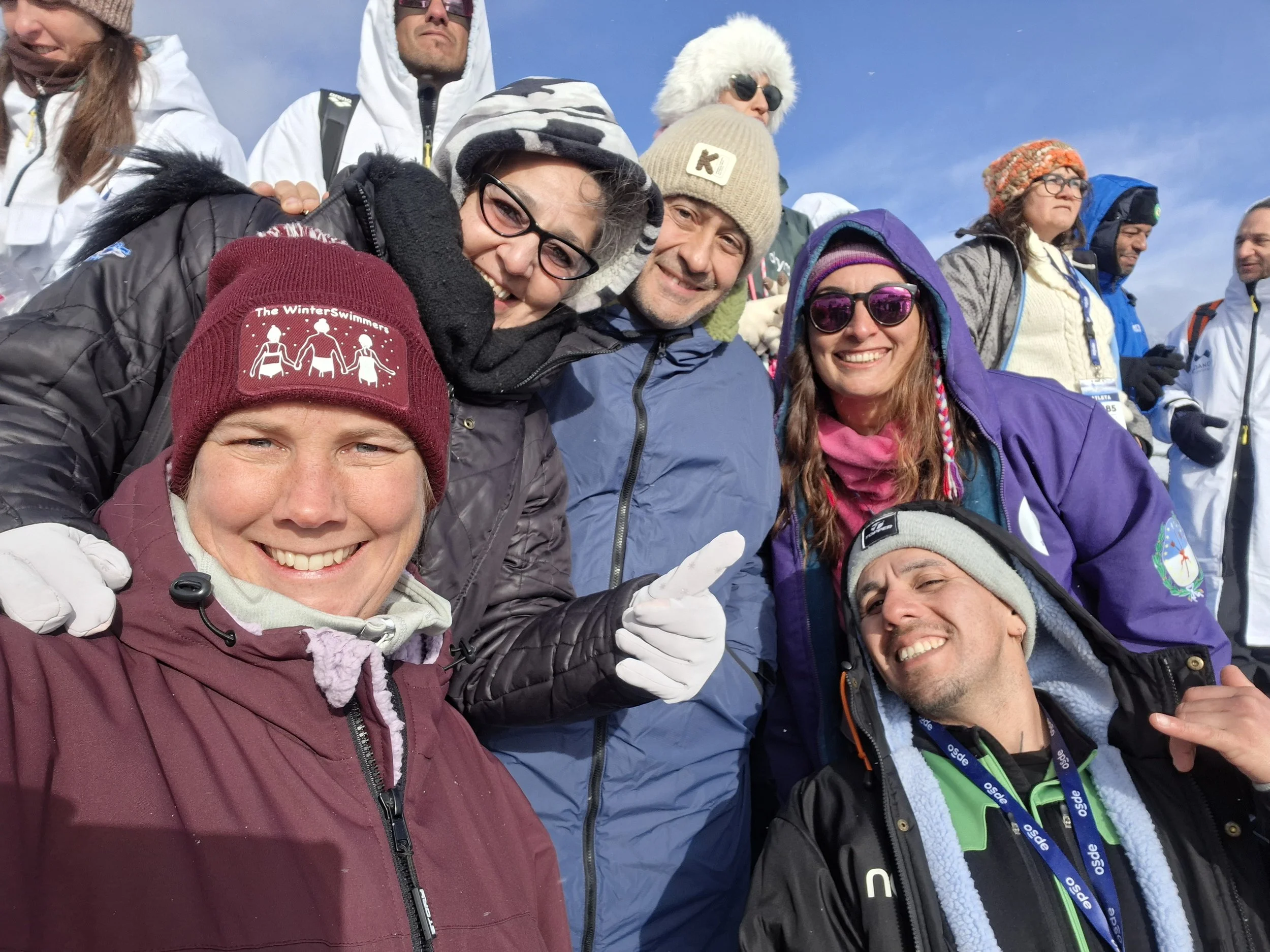
Sunshine on the faces and warm hearts.
I competed in both breaststroke and freestyle. In winter swimming, “freestyle” effectively means that swimmers may choose any stroke, although front crawl is by far the most common. Across the event I raced over distances ranging from 25 to 200 metres and also competed in the longest distance I had ever swum in cold open water. A large boat, normally used to take tourists closer to the glacier, carried us out onto the lake, which is around three times the size of Lake Constance. From there, we started the 300-metre race. In small groups, we climbed from the boat onto a floating platform, sat down with our feet dangling in the icy water, and then dropped in. Once again, we began on command. The finish line was marked by a yellow arch on the shore. Kayaks and small boats accompanied us throughout the race, and carrying a safety buoy was mandatory. This was my favourite event. With every breath I could once again admire the glacier, this time from the side, as I had chosen to swim front crawl. I focused entirely on enjoying the experience and hardly noticed that I was not even the last swimmer in the field. My thoughts were occupied only by the milky water around me (I love it when there is nothing beneath me but shades of blue-grey), the complete absence of aquatic plants (excellent!), the glacier itself, and my joy at simply being there. I found it utterly beautiful. For almost four years I had dreamed of swimming here, and now I was finally doing it.
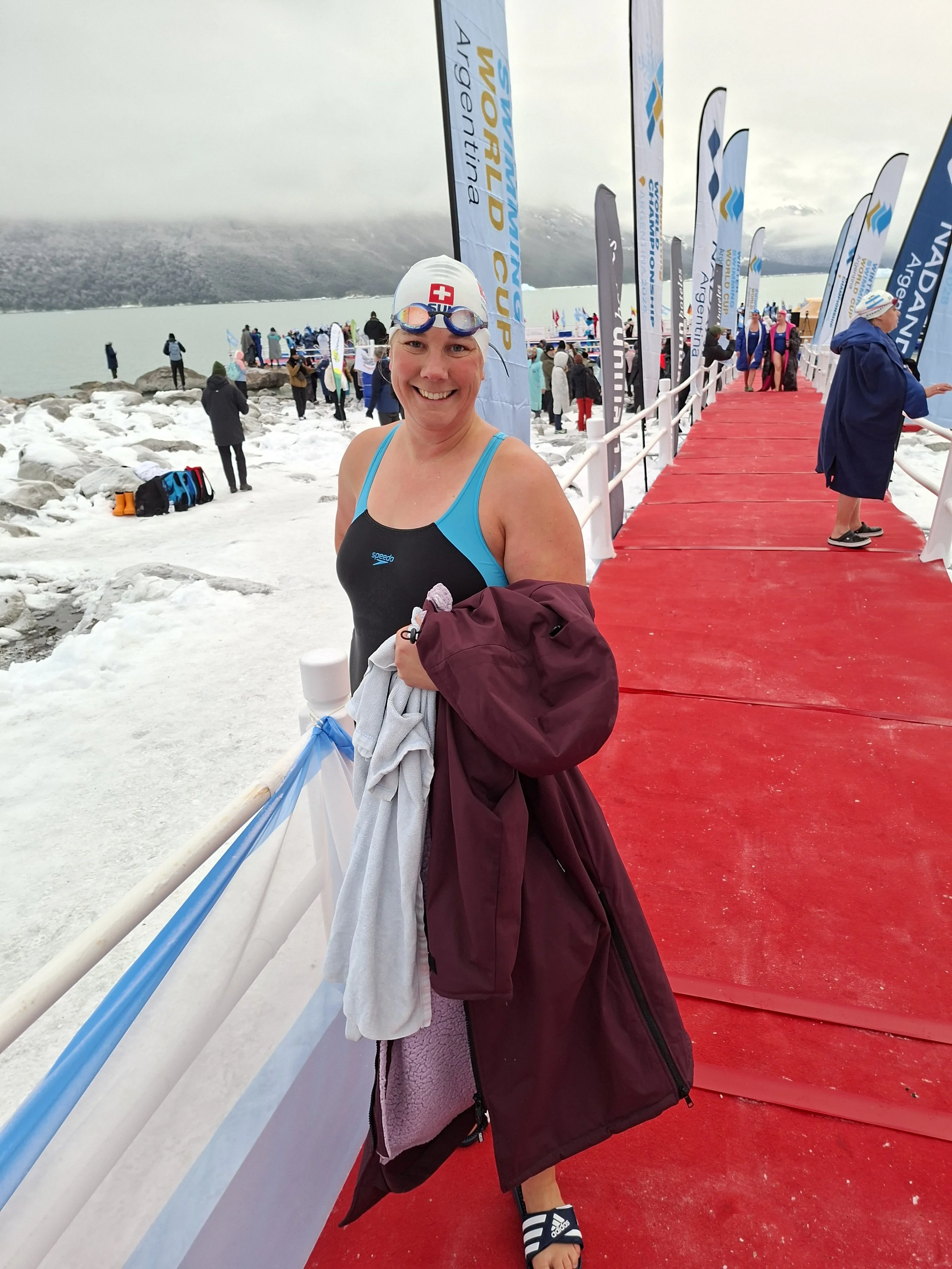
After 25 m breaststroke.
A Surprise at My World Cup Debut
The days flew by. Only the awards ceremony on the final evening seemed to last forever. Yet I really cannot complain, as it was the moment when every swimmer's achievements were recognised. Round after round, I applauded as the women and men in the various categories were called up to the podium together. By then, I had finally accepted that I had indeed finished third in the 200-metre event. To my great surprise, I also won a bronze medal in the 50-metre breaststroke. I am still astonished by my performance and absolutely delighted that, alongside countless memories of an incredible experience, I was able to bring home some tangible mementoes as well.
The Final Days at the End of the World
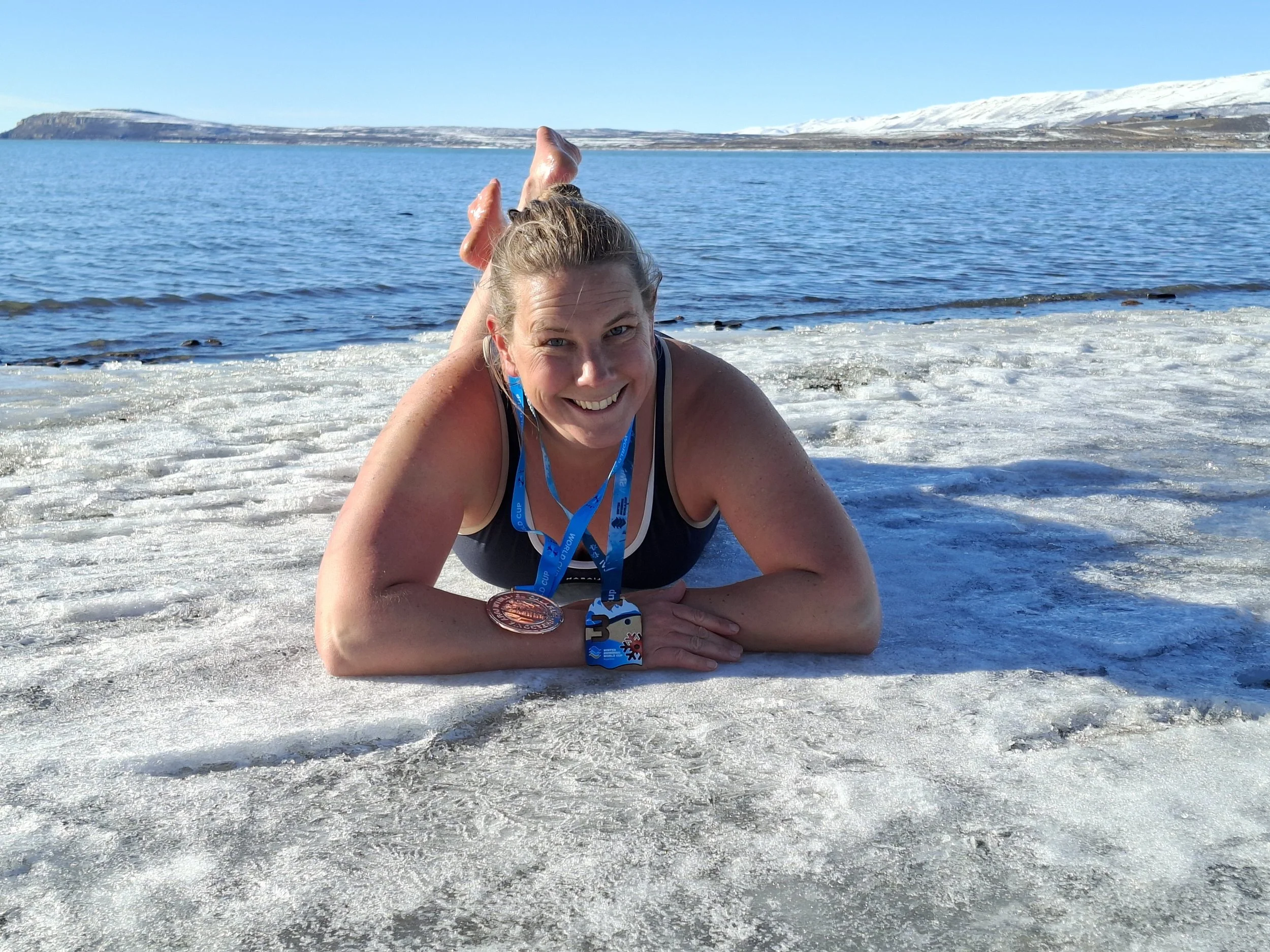
A cool way to create memories.
To mark the end of the WSWC, the participants and the people of El Calafate came together for a community swim in town. We celebrated, laughed, endured the cold one last time, and made the most of the stunning scenery for photos with our medals. The experience was incredibly intense, and there is still so much more I could tell. About the two days I spent afterwards in El Chaltén, swimming in Lago Viedma, visiting Lago del Desierto, and enjoying solitary hours in the snow-covered hiking paradise beneath Fitz Roy. Fortunately, it has already been confirmed that the next IWSA (International Winter Swimming Association) World Championship, in two years’ time, will also take place in El Calafate, or more precisely, at the Perito Moreno Glacier. Because one thing has been certain ever since my very first visit to Patagonia: I will be back!
